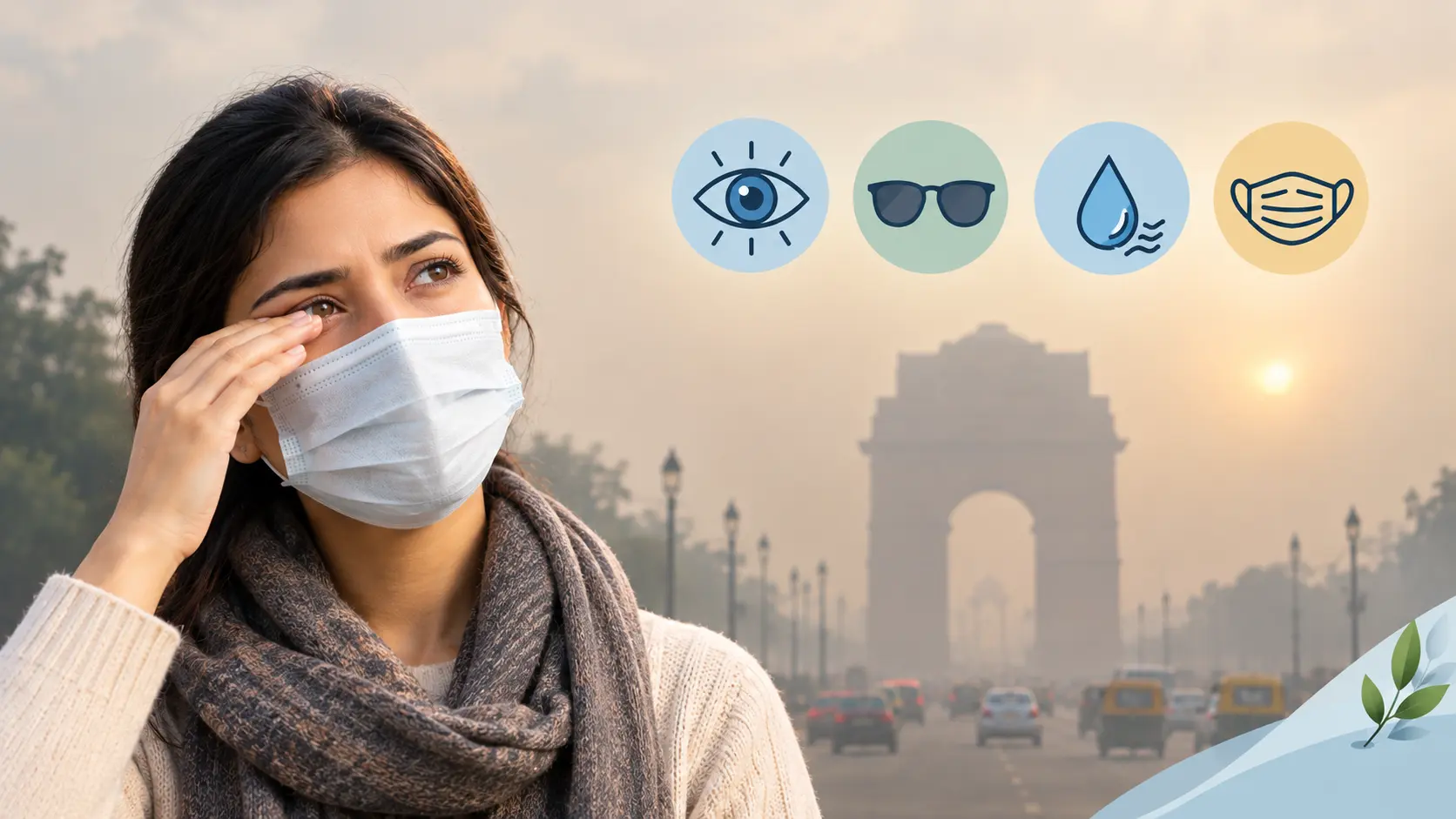
How to Protect Your Eyes from Delhi’s November Smog and Dryness
Every November, the same thing happens. The morning commute starts feeling heavier, the sky turns a dull grey, and by afternoon your eyes feel like someone rubbed sand into them.
If that sounds familiar, you’re not imagining it. We talk a lot about pollution and our lungs, but our eyes sit right out in the open, with nothing between them and the smog. Dryness, redness, burning and watering are some of the most common complaints people bring to eye clinics in Delhi at this time of year.
The good news is that a few small habits can make a real difference.
What Does Smog Actually Do to Your Eyes?
The surface of your eye is covered by a thin film of tears. It keeps the eye moist and also washes away dust and other particles.
When the air is full of smoke and fine dust, that film has a harder time doing its job. Irritants settle on the eye, and the eye reacts. For most people this means temporary discomfort. If you already have dry eyes or allergies, it can feel a lot worse.
Here’s what people usually notice:
- Redness
- Burning or stinging
- A gritty, “something is in my eye” feeling
- Watering
- Itching
- Sensitivity to light
- Discomfort with contact lenses
Everyone reacts differently. Two people can travel on the same road, and only one of them ends up with red, irritated eyes.
Why Are My Eyes Dry and Watery at the Same Time?
This confuses a lot of people, and it’s a fair question.
When the eye surface gets irritated, the eye makes extra tears to flush the irritant out. These reflex tears are mostly water and don’t coat the eye well. So you end up with watery eyes that still feel dry and burning. Watering doesn’t always mean your eyes are well lubricated.
It’s Not Always Just the Pollution
Here’s something we see often. Someone blames the smog for everything, but the real picture is more complicated.
November also means cooler, drier air, heaters and AC at work, long hours on a laptop, and a lot of scrolling on the phone in the evening. When you stare at a screen, you blink far less than normal. Add pollution on top, and your eyes get hit from several sides at once.
So if your symptoms stay even on days when you’ve barely stepped out, pollution may not be the whole story.
7 Simple Ways to Protect Your Eyes from Delhi Smog
- Wear glasses outside.
Sunglasses or clear protective glasses won’t block everything, but they cut down on wind, dust and particles reaching your eyes. If you ride a two-wheeler, a helmet visor helps too. - Don’t rub your eyes.
We know, it’s the first thing you want to do when they itch. But your hands carry dust, and rubbing can make the irritation worse. Wash your hands first if you must touch your eyes. - Wash your face when you get home.
Dust and smoke particles stay on your skin and eyelids. A quick face and hand wash after coming in from outside is an easy habit that helps. - Give your eyes a break from the screen.
Look away from your phone or laptop every 20 minutes or so, and blink fully and often. It sounds basic, but it genuinely reduces dryness. - Watch your indoor air too.
Dusty rooms, very dry air, and an AC or fan blowing straight at your face can all irritate your eyes. Try to keep the airflow pointed away from you. - Be careful with contact lenses.
Lenses can trap dust against the eye. If your eyes feel red or uncomfortable, take the lenses out and switch to glasses for a while. Don’t push through the discomfort, and don’t skip lens hygiene. - Don’t treat red eyes with random drops.
This is a very common mistake. A red eye can come from dryness, allergy, infection or something else, and each needs different treatment. A bottle that worked for your friend may not suit you. If the redness keeps coming back, get it checked rather than guessing.
Can Pollution Make Dry Eye Worse?
Yes, it can. If you already have dry eyes, smog and dust can make the burning, grittiness and watering more noticeable.
That said, dry eye has many causes, including screen use, contact lenses, age, some medicines and eyelid problems. Persistent dryness shouldn’t be put down to “just pollution” without a proper check.
When Should You See an Eye Doctor?
A bit of irritation after a dusty ride usually settles on its own. But don’t ignore it if you have:
- Redness that doesn’t go away
- Eye pain
- Constant dryness or burning
- Watering that keeps happening, or only in one eye
- Discharge
- Blurry or reduced vision
- Strong sensitivity to light
- Discomfort that continues with contact lenses
At Indraprasth Eye Tech, our eye specialists look at what’s actually causing your symptoms instead of just treating the redness. The right treatment depends on the cause, and that’s what an examination is for.
A Simple November Eye-Care Routine
You don’t need anything complicated:
- Before going out: wear protective glasses.
- After coming home: wash your hands and face, and keep your hands off your eyes.
- At work: take screen breaks and blink properly.
- If you’re already on eye drops or medication: keep following your doctor’s advice and don’t change things on your own.
- If symptoms don’t settle: don’t wait for the season to end. Get your eyes checked.
Frequently Asked Questions
Can Delhi pollution cause dry eyes?
It can irritate the eye surface and make existing dry eye symptoms worse. It’s often one of several factors, not the only one.
Why do my eyes turn red after going outside?
Dust, smoke and other irritants can cause redness. Allergies and infections look similar, so if it keeps happening, an eye check is a good idea.
How can I protect my eyes from Delhi smog?
Wear protective glasses outdoors, avoid rubbing your eyes, wash your hands and face after coming home, and limit time in heavily polluted areas.
Can pollution cause watery eyes?
Yes. Irritation makes the eyes produce extra tears. If the watering is constant, in one eye only, or comes with pain or discharge, see a specialist.
Is it safe to use any eye drop for red eyes?
It’s best not to. Different problems need different treatment, so recurring redness should be examined first.
Does screen time make it worse?
Yes. We blink less on screens, which dries the eyes and adds to the irritation from pollution.
When should I get my eyes checked?
If redness, dryness, pain, watering or vision changes continue or get worse, don’t wait.