
Advanced Diabetic Eye Disease Diagnosis and Treatment
Comprehensive Care for Diabetic Retinopathy and Other Diabetes Related Eye Conditions to Help Preserve Your Vision.
Protect Your Vision with Regular Diabetic Eye Examinations
Diabetes can affect more than your blood sugar levels. Over time, high blood glucose can damage the small blood vessels in the eyes and increase the risk of vision-threatening eye conditions. Some of these conditions may develop gradually without noticeable symptoms in the early stages.
At Indraprasth Eye Tech, Noida, we emphasise the importance of regular eye examinations for people living with diabetes. Early detection, appropriate monitoring and timely treatment can help manage diabetes-related eye complications and protect vision.
Whether you have recently been diagnosed with diabetes or have been living with it for several years, taking care of your eyes should be an important part of your overall diabetes management.
How Does Diabetes Affect the Eyes?
Diabetes can affect different structures of the eye. Persistently elevated blood glucose levels may damage the tiny blood vessels in the retina, the light-sensitive tissue at the back of the eye. Diabetes can also increase the risk of cataracts, glaucoma and other vision-related problems.
Some diabetes-related eye conditions may not cause symptoms until they become advanced. This is why waiting for blurred vision or eye discomfort before scheduling an examination is not advisable.
Regular diabetic eye screening helps identify changes at an earlier stage, even when your vision still seems normal.
Common Eye Conditions Associated with Diabetes
1. Diabetic Retinopathy
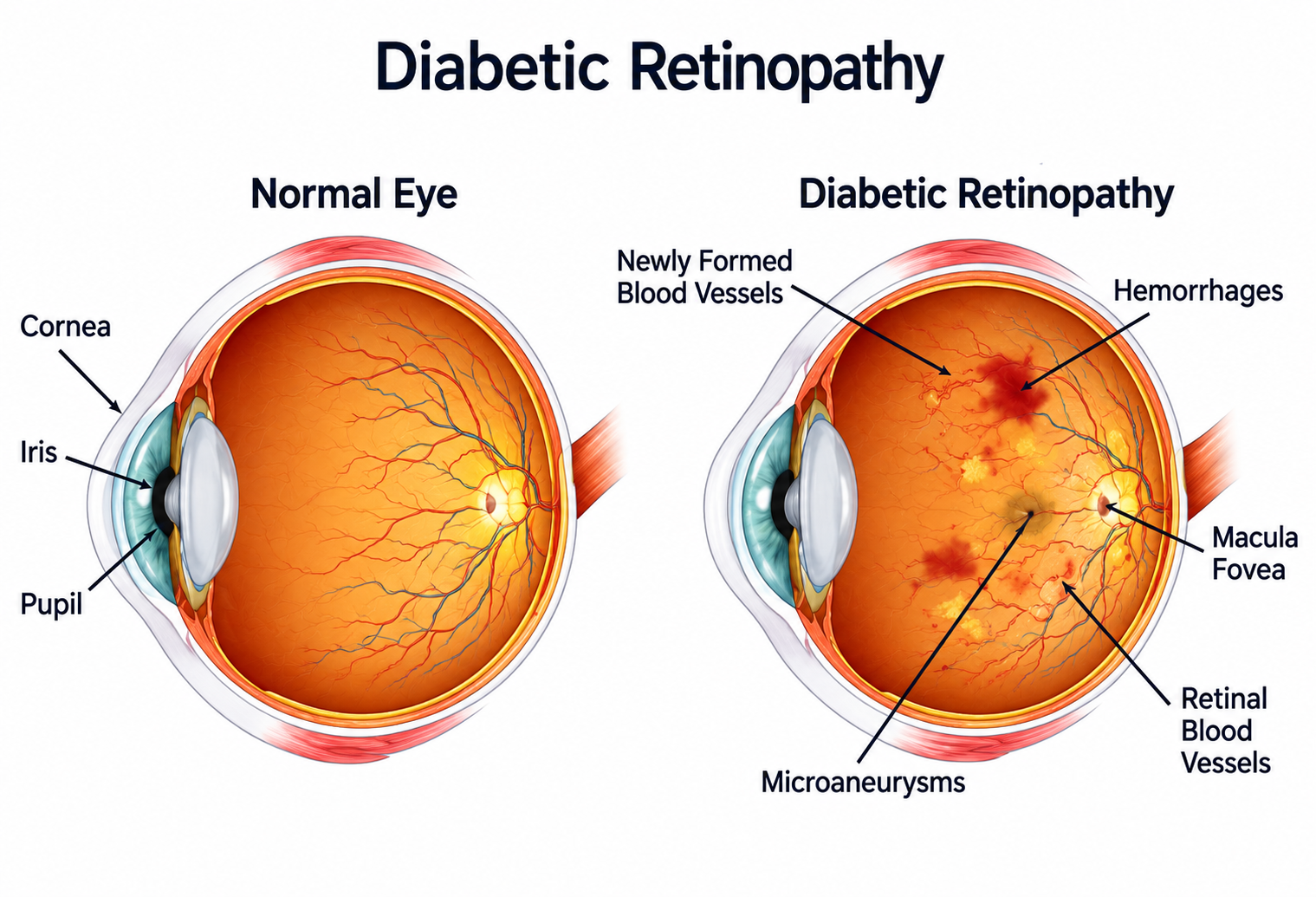
Diabetic retinopathy is one of the most important eye complications associated with diabetes. It develops when high blood glucose damages the small blood vessels in the retina.
In the early stages, the affected blood vessels may leak fluid or blood. As the condition progresses, abnormal new blood vessels may develop and cause further complications, including bleeding inside the eye and retinal detachment.
2. Diabetic Macular Edema
The macula is the central part of the retina responsible for detailed vision, including reading and recognising faces.
Diabetic macular edema occurs when fluid accumulates in the macula, causing swelling and potentially affecting central vision. It can develop at different stages of diabetic retinopathy.
Possible symptoms include blurred central vision, difficulty reading and reduced clarity while performing close-up activities. Treatment depends on the severity of the condition and may include injections into the eye, laser treatment or other approaches when clinically indicated.
3. Cataracts
A cataract occurs when the natural lens inside the eye becomes cloudy. People with diabetes may develop cataracts earlier or have an increased risk of developing them.
Common symptoms include blurred vision, glare, difficulty seeing at night and faded colours. An ophthalmologist can assess whether cataract or another eye condition is responsible for these changes.
Symptoms of Diabetes-Related Eye Problems
Many diabetes-related eye conditions initially develop without symptoms. However, you should seek an eye examination if you notice:
- Blurred or fluctuating vision
- Difficulty reading or seeing fine details
- Dark spots or floaters in your vision
- Flashes of light
- Distorted or reduced central vision
- Sudden changes in eyesight
- A curtain-like shadow across your vision
- Sudden loss of vision
These symptoms do not always mean that diabetes is the cause, but they should not be ignored.
Sudden vision loss, a sudden increase in floaters, flashes or a curtain-like shadow requires urgent eye assessment. Do not wait for your next routine appointment if these symptoms occur.
Why Is Regular Diabetic Eye Screening Important?
One of the biggest challenges with diabetic eye disease is that damage can occur before a person notices any change in vision.
A person may be able to read, work and perform everyday activities normally while early changes are developing in the retina. A routine spectacle check alone may not be sufficient to assess the retina for diabetic complications.
A comprehensive diabetic eye examination may include:
- Assessment of visual acuity
- Examination of the retina, often after dilating the pupils
- Evaluation for signs of diabetic retinopathy
- Assessment of the macula when indicated
- Optical coherence tomography (OCT) if required
- Retinal photography or additional investigations when appropriate
The exact tests depend on your symptoms, medical history and examination findings.
Regular screening helps your ophthalmologist identify changes, determine whether further investigations are necessary and recommend an appropriate follow-up schedule.
When Should People with Diabetes Have an Eye Examination?
The timing of diabetic eye examinations depends on the type of diabetes, the duration of the condition, previous examination findings and individual risk factors.
People with type 2 diabetes should generally have a comprehensive dilated eye examination at the time of diagnosis. People with type 1 diabetes are generally advised to have their first comprehensive eye examination at diagnosis and thereafter every year.
During pregnancy, women with pre-existing diabetes may need an eye examination before pregnancy or during the first trimester, followed by monitoring as recommended by their ophthalmologist.
After the initial examination, the frequency of follow-up depends on the retinal findings and the treating eye specialist’s advice. People with existing diabetic retinopathy may need more frequent assessments.
Do not postpone an examination simply because your blood sugar is controlled or your vision seems normal.
Diagnosis and Evaluation of Diabetic Eye Disease
An ophthalmologist assesses the retina and other eye structures to look for signs of diabetes-related damage.
A dilated retinal examination allows the doctor to examine the back of the eye more clearly. Additional tests, such as retinal photography or OCT, may be recommended to evaluate retinal blood vessels, swelling or other abnormalities.
The results help determine whether the patient needs routine monitoring, further investigations or treatment.
Because diabetic eye disease can occur alongside other conditions, a complete assessment is important for developing an appropriate care plan.
Treatment Options for Diabetic Eye Disease
Treatment depends on the type of eye condition, its severity and whether vision is affected.
Regular Monitoring
Some patients with early diabetic retinopathy may not need immediate treatment but require regular examinations to monitor changes.
Intravitreal Injections
Certain medicines can be injected into the eye to treat conditions such as diabetic macular edema and some forms of diabetic retinopathy. Anti-VEGF medicines are commonly used for appropriate indications. Other medicines may be considered in selected cases.
The choice of medicine and the number and timing of injections depend on the patient’s condition and response to treatment.
Laser Treatment
Laser treatment may be recommended for certain stages of diabetic retinopathy. Depending on the condition, laser therapy can help reduce the risk of further vision loss.
Vitrectomy Surgery
In advanced cases, complications such as persistent bleeding inside the eye or certain types of retinal detachment may require vitrectomy surgery.
Not every patient with diabetes needs injections, laser treatment or surgery. The appropriate treatment is determined after a detailed examination by an ophthalmologist, particularly a retina specialist when indicated.
Important measures include:
- Maintaining blood glucose levels within the target range recommended by your treating doctor
- Monitoring blood pressure and cholesterol
- Taking prescribed diabetes medicines as directed
- Attending regular diabetic eye examinations
- Avoiding smoking
- Following a balanced diet and maintaining an active lifestyle as medically appropriate
- Informing your eye specialist about your diabetes history and any changes in medication or health
Good blood sugar control is important, but it does not eliminate the need for regular eye screening.
Why Choose Indraprasth Eye Tech, Noida?
Diabetes-related eye conditions require careful evaluation because early changes may not be noticeable to the patient.
At Indraprasth Eye Tech, our approach focuses on helping patients understand their eye health, recognise potential warning signs and seek appropriate evaluation when needed.
Our focus includes:
- Evaluation of diabetes-related vision concerns
- Assessment for diabetic retinopathy and other retinal conditions
- Appropriate retinal investigations when indicated
- Guidance regarding monitoring and available treatment options
- Individualised advice on follow-up and ongoing eye care
The aim is to support informed decisions and timely care based on each patient’s clinical findings.
Frequently Asked Questions
Diabetes can cause severe vision loss if complications such as advanced diabetic retinopathy are not detected and managed appropriately. Regular screening and timely treatment can reduce the risk of serious vision complications.
Yes. Early diabetic retinopathy often has no noticeable symptoms. A dilated retinal examination is important even when vision appears normal.
Good blood glucose control helps reduce the risk of diabetic eye complications. Managing blood pressure and cholesterol is also important. However, regular eye examinations remain necessary.
The appropriate interval depends on the type of diabetes, the patient’s medical history and previous retinal findings. Your ophthalmologist will recommend a suitable screening and follow-up schedule.
Yes. Diabetes-related retinal changes can develop before symptoms appear. A normal-feeling eye does not necessarily mean that the retina is healthy.