
LASIK Eye Surgery Cost And Treatment Options
The cost of LASIK eye surgery varies depending on the procedure, technology used, and individual vision correction needs.
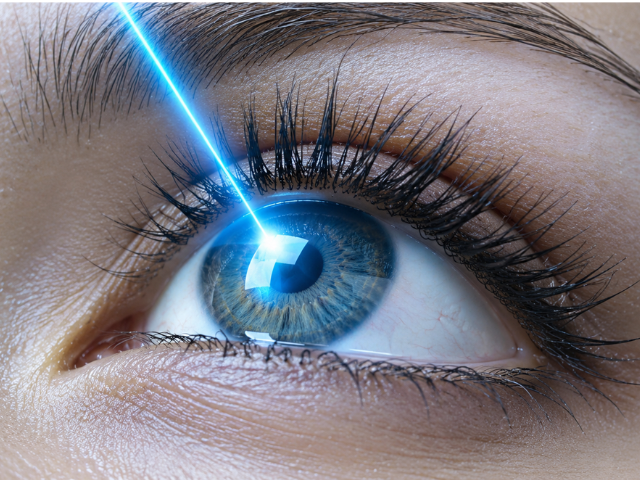
What Is LASIK Eye Surgery?
LASIK (Laser-Assisted In Situ Keratomileusis) is a type of refractive surgery used to correct certain vision problems, including myopia (short-sightedness), hyperopia (long-sightedness) and astigmatism. The procedure reshapes the cornea, the transparent front surface of the eye, so that light can focus more accurately on the retina.
For people who depend on spectacles or contact lenses for clear vision, LASIK may be one of the options to consider after a comprehensive eye examination. However, it is not suitable for everyone, and the expected outcome varies from person to person.
At Indraprasth Eye Tech, Noida, understanding the patient’s eye health, refractive error and individual visual needs is an important part of evaluating whether laser vision correction may be appropriate.
How Does LASIK Work?
LASIK works by using a precisely controlled laser to reshape the cornea. This changes the way light enters the eye and helps correct refractive errors.
The procedure generally involves the following steps:
- Pre-operative evaluation: The ophthalmologist assesses the patient’s vision, corneal shape and thickness, eye health and medical history.
- Preparation: Anaesthetic eye drops are used to numb the eye. The patient remains awake during the procedure.
- Corneal treatment: A thin corneal flap is created, and a laser reshapes the underlying corneal tissue according to the planned correction.
- Flap repositioning: The flap is placed back into position, where it begins to heal naturally.
- Lenticule based treatment: A thin tissue is removed from the middle layers of the cornea after careful assessment and the remaining layers are apposed.
- Post-operative assessment: The patient receives instructions regarding eye care, prescribed medication and follow-up examinations.
The exact treatment plan depends on the individual’s clinical findings and the type of refractive correction being considered.
What Vision Problems Can LASIK Correct?
LASIK may be considered for selected patients with the following refractive errors:
1. Myopia (Short-Sightedness)
High Myopia causes distant objects to appear blurred while nearby objects may remain relatively clear. LASIK reshapes the cornea to help focus distant images more accurately.
2. Hyperopia (Long-Sightedness)
Hyperopia can make near vision difficult and may also affect distance vision, depending on its degree. Selected patients may be considered for LASIK after appropriate evaluation.
3. Astigmatism
Astigmatism occurs when the cornea or lens has an uneven curvature, resulting in blurred or distorted vision. LASIK may help correct certain types and degrees of astigmatism.
The suitability of LASIK depends on the type and degree of refractive error, corneal characteristics and overall eye health. Other refractive procedures may be more appropriate in some cases.
Who May Be Suitable for LASIK Surgery?
LASIK eligibility is determined through a detailed ophthalmic examination. A person who wears spectacles or contact lenses is not automatically a suitable candidate.
Factors generally considered include:
- Being at least 18 years old, with an appropriately stable spectacle prescription.
- Having a suitable corneal thickness and shape.
- Having generally healthy eyes without conditions that make the procedure unsafe.
- Having a refractive error within the treatable range of the selected procedure.
- Understanding the potential benefits, limitations and risks of surgery.
- Having realistic expectations regarding the need for spectacles after treatment.
Certain conditions, such as an unstable prescription, keratoconus or other corneal abnormalities, significant dry eye, active eye disease, or some systemic medical conditions, may make LASIK unsuitable or require additional assessment.
Pregnancy, breastfeeding and certain medications can also affect refractive stability or surgical planning. These factors should be discussed with the treating ophthalmologist.
Who May Not Be Suitable for LASIK?
LASIK may not be recommended for everyone. Additional evaluation or an alternative treatment may be needed in situations such as:
- Thin or irregular corneas.
- Keratoconus or suspected progressive corneal weakness.
- Significant or uncontrolled dry eye disease.
- An unstable spectacle prescription.
- Active eye infections or inflammation.
- Certain autoimmune conditions or medical circumstances that may affect healing.
- Expectations that cannot reasonably be achieved with refractive surgery.
In some cases, another vision-correction procedure or continued use of spectacles or contact lenses may be a more appropriate option. The final decision should be made after a comprehensive examination and discussion of the available alternatives.
What Tests Are Required Before LASIK?
A thorough pre-operative assessment helps determine whether LASIK is appropriate and supports individualised treatment planning.
Depending on the patient’s needs, the evaluation may include:
- Vision assessment and refraction: To measure the current spectacle prescription and determine the degree of refractive error.
- Corneal topography or tomography: To evaluate corneal shape and identify irregularities.
- Corneal thickness measurement (pachymetry): To assess whether sufficient corneal tissue is available for the planned treatment.
- Tear film and dry eye assessment: To identify problems that may affect comfort, healing or visual quality.
- Anterior and posterior eye examination: To evaluate overall ocular health and identify relevant conditions.
- Pupil assessment and additional measurements: When indicated for surgical planning.
Not every patient requires exactly the same set of investigations. The ophthalmologist determines which tests are necessary based on the clinical findings.
What Are the Possible Benefits of LASIK?
For appropriately selected patients, LASIK may offer several potential benefits:
- Reduced dependence on spectacles or contact lenses.
- Correction of certain refractive errors.
- A procedure that is generally performed without an overnight hospital stay.
- A relatively short surgical procedure.
- Improvement in unaided distance vision for many suitable patients.
The degree of improvement and the time required for visual recovery vary. LASIK does not guarantee perfect vision or permanent freedom from spectacles, and some patients may still require glasses for particular activities or future age-related vision changes.
What Are the Risks and Side Effects of LASIK?
LASIK is a surgical procedure, and its possible risks should be understood before making a decision.
Potential side effects and complications include:
- Dryness, irritation or a gritty sensation in the eyes.
- Temporary fluctuations or blurring of vision during recovery.
- Glare, halos or difficulty seeing clearly in low-light conditions.
- Under correction, overcorrection or residual refractive error.
- Continued or future dependence on spectacles or contact lenses.
- Infection, inflammation or complications related to corneal healing.
- Rarely, serious complications that may affect visual quality or cause lasting vision loss.
Some symptoms improve as healing progresses, while others may persist. The likelihood and severity of complications depend on individual factors, and no surgical procedure is entirely risk-free.
A detailed discussion with the ophthalmologist can help patients understand their individual risk profile, expected outcomes and alternative options.
Recovery and Aftercare Following LASIK
Recovery differs between individuals. Many patients notice an improvement in vision relatively soon after LASIK, but vision may fluctuate during the initial healing period.
Following the procedure, patients should:
- Use prescribed eye drops exactly as instructed.
- Attend scheduled follow-up appointments.
- Avoid rubbing or pressing on the eyes.
- Follow the surgeon’s advice regarding bathing, swimming, eye makeup, exercise and other activities.
- Use protective eye shields if advised.
- Avoid driving until vision is sufficiently clear and the treating clinician considers it safe.
- Contact the eye-care team promptly if they experience severe pain, sudden deterioration in vision, increasing redness or other concerning symptoms.
Patients should not start or stop eye medication without appropriate medical advice. Following the recommended aftercare plan is an important part of recovery.
Does LASIK Provide Permanent Freedom from Glasses?
LASIK changes the shape of the cornea to correct the refractive error present at the time of treatment. However, it cannot prevent every future change in vision.
Some patients may have residual refractive error or experience changes over time. Presbyopia, an age-related reduction in near-focusing ability, can develop even after successful distance-vision correction. Reading glasses may therefore be needed later in life.
The likelihood of needing glasses in the future depends on individual circumstances, the type of refractive error and age-related changes.
Frequently Asked Questions
Anaesthetic eye drops are generally used to numb the eyes during the procedure. Patients may experience pressure or mild discomfort, and temporary irritation or dryness can occur afterwards. Individual experiences vary.
The laser treatment itself is usually brief, although the complete appointment takes longer because of preparation, positioning, instructions and post-procedure assessment. The exact duration depends on the treatment plan.
Both eyes are commonly treated during the same session when clinically appropriate. The treating ophthalmologist determines the safest and most suitable approach for each patient.
The time needed to resume work depends on visual recovery, the nature of the job and the surgeon’s advice. Patients should follow their individual post-operative instructions rather than assume that everyone recovers at the same rate.
Suitability depends on the degree and type of refractive error, corneal thickness and shape, and other eye-health factors. Higher refractive errors may require additional caution or consideration of alternative procedures.
No. A comprehensive eye examination is necessary to determine eligibility and discuss the most appropriate vision-correction options.
LASIK, PRK and SMILE are different refractive procedures with differences in technique, eligibility, recovery and potential risks. The appropriate option depends on the patient’s clinical findings and should be determined through professional evaluation.
Considering laser vision correction begins with understanding your current prescription, eye health and visual needs. A comprehensive ophthalmic assessment can help establish whether LASIK may be appropriate and whether other options should be considered.