
Refractive Surgery for Advanced Vision Correction and Clearer Sight
Refractive surgery offers advanced treatment options to improve visual clarity and reduce dependence on glasses or contact lenses, with the right procedure determined by your eye health, prescription and comprehensive eye evaluation.
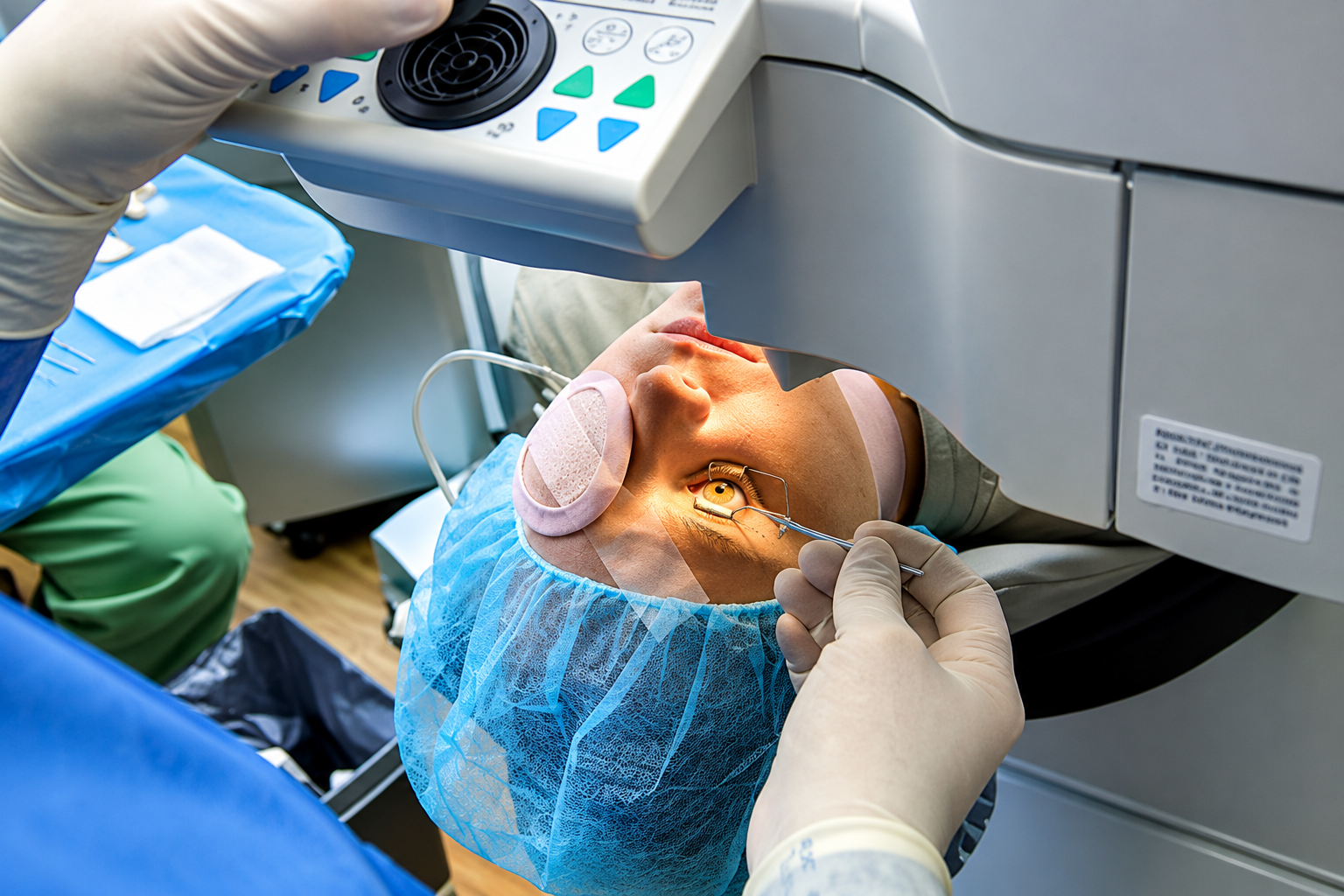
What Is Refractive Surgery?
Refractive surgery refers to surgical procedures that correct the way the eye focuses light. Depending on the procedure, this may involve reshaping the cornea, the transparent front surface of the eye, or placing a corrective lens inside the eye.
These procedures are used to address different types and degrees of refractive errors. Not every patient is suitable for every procedure, and some individuals may be advised to continue using spectacles or contact lenses.
The choice of treatment depends on factors such as corneal thickness and shape, prescription stability, age, tear film health, overall eye health and lifestyle requirements.
Types Of Refractive Surgery
Different procedures may be considered depending on the patient’s clinical findings and visual requirements.
- LASIK (Laser-Assisted in Situ Keratomileusis)
LASIK is a laser vision correction procedure that reshapes the cornea to improve the eye’s focusing ability. A thin flap is created in the cornea, and an excimer laser is used to reshape the underlying tissue.
It may be considered for: Selected patients with suitable corneal measurements and stable refractive errors.
Important considerations: Corneal thickness, dry eye symptoms, corneal shape and other eye health factors must be evaluated before surgery.
- SMILE (Small Incision Lenticule Extraction)
SMILE is a minimally invasive laser vision correction procedure in which a small piece of corneal tissue, called a lenticule, is created using a femtosecond laser and removed through a small incision.
It may be considered for: Selected patients, particularly those with certain degrees of myopia, with or without astigmatism, depending on the approved procedure and clinical assessment.
Important considerations: Eligibility depends on the refractive prescription, corneal measurements, eye health and the specific procedure available.
- PRK (Photorefractive Keratectomy)
PRK is a surface laser procedure in which the outer layer of the cornea is removed before laser reshaping. The surface layer subsequently regenerates during healing.
It may be considered for: Selected patients for whom a surface-based laser procedure is appropriate, including some patients who may not be suitable for LASIK.
Important considerations: Initial discomfort and visual recovery may take longer than with LASIK, and healing requires appropriate follow-up care.
- Implantable Collamer Lens (ICL)
ICL surgery involves placing a specially designed corrective lens inside the eye, behind the iris and in front of the natural lens. It corrects refractive error without reshaping the cornea in the same way as laser procedures.
It may be considered for: Selected patients with certain refractive errors, including some with higher prescriptions or corneal characteristics that make laser correction less suitable.
Important considerations: Assessment of the internal eye anatomy, eye pressure, endothelial cell count where indicated and other relevant measurements is essential.
Which Refractive Surgery Is Right For You?
There is no single procedure that is suitable for everyone. LASIK, SMILE, PRK and ICL differ in their technique, eligibility requirements, recovery and risks.
A qualified ophthalmologist can recommend an appropriate option after reviewing your examination findings and discussing your expectations. In some cases, refractive surgery may not be advisable.
Who May Be Suitable For Refractive Surgery?
Refractive surgery may be considered for individuals who:
- Have high myopia, hyperopia or astigmatism that can be addressed by an appropriate procedure.
- Have a sufficiently stable spectacle prescription.
- Have corneal measurements and eye health findings suitable for the proposed treatment.
- Understand the possible benefits, limitations, risks and recovery requirements.
- Have realistic expectations regarding their vision after surgery.
Suitability is determined individually. Being an adult or having a particular spectacle number does not automatically make someone eligible.
Who May Need Further Assessment Or An Alternative?
Refractive surgery may be delayed or unsuitable for some patients, including those with:
- An unstable or changing spectacle prescription.
- Thin, irregular or otherwise unsuitable corneas.
- Keratoconus or suspected corneal ectasia.
- Significant dry eye disease or ocular surface problems.
- Certain eye diseases, active eye infections or inflammation.
- Medical conditions or medications that may affect healing.
Pregnancy, breastfeeding and certain systemic conditions may also affect the timing or suitability of elective refractive surgery. The ophthalmologist will assess relevant medical and eye health factors before advising on treatment.
What Happens During A Refractive Surgery Evaluation?
A detailed preoperative assessment helps determine whether surgery is appropriate and which procedure may be considered.
The evaluation may include:
- Vision and prescription assessment
Your visual acuity and refractive error are measured, and prescription stability is reviewed.
- Corneal examination and mapping
Corneal shape, curvature and thickness are assessed using appropriate diagnostic tests.
- Tear film and ocular surface assessment
The eye surface and tear film are examined to identify conditions that may need treatment before surgery.
- Comprehensive eye examination
The ophthalmologist evaluates overall eye health and performs additional tests where clinically indicated.
- Individualised treatment discussion
Suitable options, expected outcomes, potential risks, limitations, alternatives and follow-up requirements are explained before a decision is made.
What Happens During The Procedure?
The steps depend on the selected procedure. Many refractive procedures are performed using local anaesthetic eye drops, and patients are generally awake during the treatment.
The surgical team explains the procedure, prepares the eye and performs the planned treatment using the appropriate equipment. The duration, surgical steps and immediate postoperative care vary by procedure and individual circumstances.
Before proceeding, patients should have an opportunity to ask questions and provide informed consent after understanding the relevant benefits, risks and alternatives.
Recovery And Aftercare
Recovery differs between LASIK, SMILE, PRK and ICL surgery. Some patients notice improved vision relatively quickly, while others require a longer period for visual recovery and stabilisation.
After surgery, patients should:
- Use prescribed eye drops according to the ophthalmologist’s instructions.
- Avoid rubbing or pressing on the eyes.
- Follow guidance regarding bathing, swimming, exercise, makeup and other activities.
- Attend all scheduled postoperative examinations.
- Avoid driving until vision is adequate and the treating doctor considers it safe.
- Seek prompt medical assessment for significant pain, sudden deterioration in vision, increasing redness or other concerning symptoms.
Follow-up care is an important part of refractive surgery, even when vision appears to be improving.
Benefits And Limitations Of Refractive Surgery
For appropriately selected patients, refractive surgery may improve uncorrected distance vision and reduce dependence on spectacles or contact lenses.
However, results vary between individuals. Surgery does not guarantee freedom from glasses, and some patients may still require spectacles for certain activities or reading, particularly as age-related changes develop.
Refractive surgery also does not prevent every future eye condition or eliminate the need for routine eye examinations.
What Are The Possible Risks?
As with any surgical procedure, refractive surgery has potential risks and limitations. Depending on the procedure, these may include:
- Dry eye symptoms or changes in tear film.
- Glare, halos, starbursts or difficulty with night vision.
- Residual refractive error or undercorrection or overcorrection.
- Temporary fluctuations in vision during healing.
- Infection, inflammation or other surgical complications.
- Rare corneal complications, including ectasia after corneal laser surgery.
- Procedure-specific complications, including those associated with an implanted lens.
The likelihood and nature of these risks vary with the procedure and the patient’s individual characteristics. Your ophthalmologist will discuss the risks relevant to your assessment.
Frequently Asked Questions
Diabetes can cause severe vision loss if complications such as advanced diabetic retinopathy are not detected and managed appropriately. Regular screening and timely treatment can reduce the risk of serious vision complications.
Some patients become less dependent on spectacles, but complete freedom from glasses cannot be guaranteed. The need for glasses depends on the procedure, healing, residual refractive error and age-related changes.
Refractive surgery is performed in appropriately selected patients, but no surgical procedure is free of risk. A preoperative evaluation and an informed discussion of potential complications are essential.
Yes. Follow-up examinations help assess healing, visual recovery and possible complications. The schedule depends on the procedure and your treating ophthalmologist’s advice.
The first step is a comprehensive refractive surgery evaluation. Your ophthalmologist will assess your prescription, corneal measurements, tear film and overall eye health before discussing appropriate options.
Considering refractive surgery? Begin with a comprehensive eye examination to understand your options.
A personalised consultation can help determine whether laser vision correction or another refractive procedure may be appropriate for your eyes.