
Paediatric Eye Problems: Comprehensive Eye Care for Children
Protecting Your Child’s Vision Through Early Detection and Care
Healthy vision plays an important role in a child’s growth, learning and everyday activities. From recognising faces during infancy to reading, writing and playing at school, children rely on their eyesight to explore and understand the world around them.
Paediatric eye problems can affect children at different stages of development. Some conditions cause noticeable symptoms, while others may develop without obvious signs. Early identification, appropriate treatment and regular eye examinations can help support healthy visual development.
At Indraprasth Eye Tech Clinic, Noida, children and their parents can seek guidance regarding common eye concerns, vision assessment and appropriate next steps based on individual clinical needs.
Every child’s vision is unique. An age-appropriate eye examination helps identify concerns and determine whether further evaluation or treatment is needed.
What Are Paediatric Eye Problems?
Paediatric eye problems are conditions that affect the eyes, vision or visual development of infants, toddlers, school-age children and adolescents.
These conditions may involve refractive errors, eye alignment, focusing difficulties, infections, allergies or disorders affecting the structures of the eye. Some children may need spectacles or other treatment, while others may require specialist assessment and ongoing monitoring.
Because children may not recognise or communicate changes in their vision, parents and caregivers play an important role in noticing unusual visual behaviour and seeking timely advice.
Common Eye Problems in Children
- Refractive Errors
Refractive errors occur when the eye does not focus light correctly on the retina, resulting in blurred vision.
Common types include:
- Myopia (nearsightedness): Distant objects appear blurred, while nearby objects may be clearer.
- Hyperopia (farsightedness): Close-up vision may be difficult, particularly when the refractive error is significant.
- Astigmatism: Uneven curvature of the cornea or lens can cause blurred or distorted vision.
Children with refractive errors may squint, sit close to screens, hold books near their faces or have difficulty seeing the classroom board. An eye examination helps determine whether spectacles or other management is appropriate.
- Amblyopia (Lazy Eye)
Amblyopia occurs when vision in one or both eyes does not develop normally during childhood. It may be associated with an uncorrected refractive error, misaligned eyes or an obstruction that interferes with clear vision during visual development.
A child may not realise that vision is reduced, particularly when the other eye sees well.
Depending on the cause and the child’s age, treatment may include prescribed spectacles, patching the stronger eye, atropine penalisation in selected cases or other specialist-directed management.
Early assessment is important because treatment is generally more effective when started during the appropriate period of visual development.
- Strabismus (Squint or Misaligned Eyes)
Strabismus is a condition in which the eyes do not align in the same direction. One eye may turn inward, outward, upward or downward.
Possible signs include:
- One eye appearing to turn or drift.
- Frequent head tilting or turning.
- Squinting or closing one eye.
- Double vision in some children.
- Difficulty with depth perception.
Treatment depends on the type and cause of the misalignment. It may involve spectacles, amblyopia treatment, selected other therapies or eye muscle surgery when indicated.
A persistent or newly noticed eye turn should be assessed by an eye specialist.
- Paediatric Cataract
A cataract is clouding of the eye’s natural lens. Although commonly associated with older adults, cataracts can also occur in infants and children and may be present from birth or develop later.
Possible signs include a white or abnormal appearance of the pupil, poor visual responses or unusual eye movements. Some cataracts may not be obvious to parents.
Paediatric cataracts require prompt specialist assessment because significant visual obstruction can interfere with visual development. Treatment depends on the cataract’s location, severity and effect on vision.
A white or unusually reflective pupil in a child requires urgent eye assessment.
- Allergic Eye Conditions
Eye allergies may cause itching, watering, redness and swelling of the eyelids. Children may rub their eyes frequently or complain of irritation, especially during exposure to allergens.
Management depends on the symptoms and their cause. It may include avoiding triggers, cold compresses and doctor-recommended medication.
Frequent eye rubbing should be discouraged. Persistent, severe or recurrent symptoms should be evaluated to distinguish allergy from infection or other eye conditions.
- Eye Infections and Conjunctivitis
Conjunctivitis is inflammation of the conjunctiva, the thin membrane covering the white part of the eye and the inner surface of the eyelids. It may result from a viral or bacterial infection, allergy or irritation.
Symptoms can include redness, watering, discharge, itching and eyelid crusting.
Treatment depends on the underlying cause. Antibiotics are not appropriate for every type of conjunctivitis, and eye drops should not be used without suitable medical advice.
Seek prompt assessment if a child has significant eye pain, light sensitivity, reduced vision or marked swelling around the eye.
- Blocked Tear duct (Congenital Dacryocystitis)
Some infants develop excessive watering or discharge because the tear drainage pathway has not fully opened. This may lead to persistent tears or crusting around the eyelids.
The condition often improves with age, but persistent symptoms or suspected infection should be assessed by a healthcare professional. Management depends on the child’s age and clinical findings.
- Ptosis (Drooping Eyelid)
Ptosis occurs when an upper eyelid sits lower than expected. It may be present from birth or develop later.
If the eyelid covers part of the pupil or affects the child’s visual development, further assessment is important. Treatment depends on the severity, cause and effect on vision.
Sudden-onset eyelid drooping, particularly with unequal pupils, abnormal eye movements or other neurological symptoms, requires urgent medical evaluation.
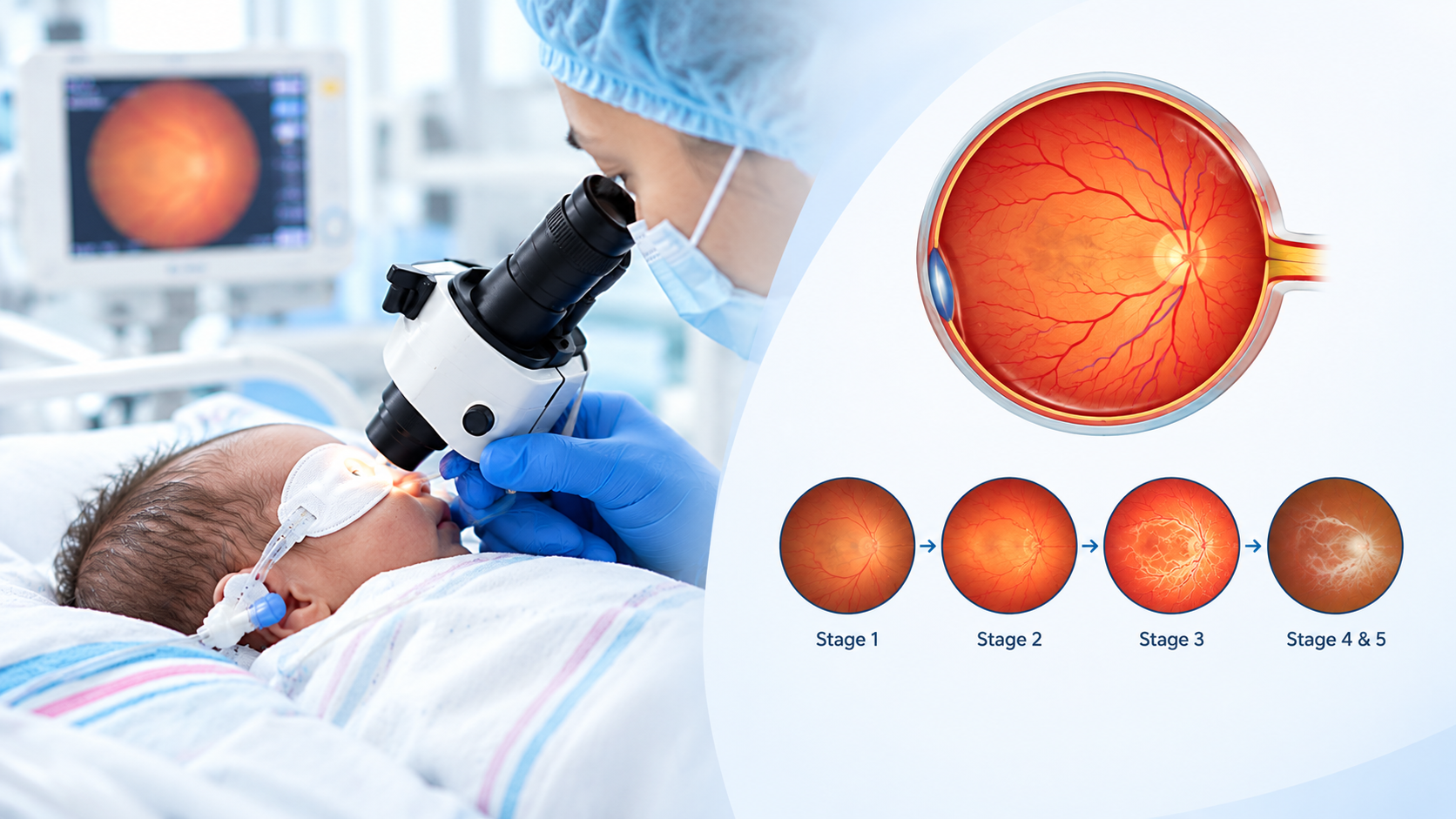
- Paediatric Eye Problems Associated with Premature Birth (Retinopathy of Prematurity)
Babies born prematurely may be at risk of retinopathy of prematurity (ROP), a condition affecting the developing blood vessels of the retina.
ROP may not produce obvious symptoms that parents can identify at home. Eligible premature infants need retinal screening according to the recommended clinical schedule.
Follow-up is important even when a baby appears to respond normally to light or movement. The timing and frequency of screening depend on gestational age, birth weight and clinical circumstances.
- Childhood Myopia Progression
Myopia often develops during school-age years and may progress as a child grows.
Children may complain of blurred distance vision, move closer to the television or struggle to see the board at school.
Management may include appropriate spectacles, regular monitoring and, for selected children, evidence-based myopia-control options recommended by an eye specialist.
Spending time outdoors and maintaining a balanced routine of near and distance activities may support healthy visual habits. The suitability of any myopia-control treatment should be assessed individually.
Warning Signs of Eye Problems in Children
Parents should consider an eye examination if a child:
- Squints frequently or closes one eye to see.
- Holds books or devices unusually close to the face.
- Complains of blurred vision, headaches or eye discomfort.
- Has persistent redness, watering, discharge or itching.
- Shows an eye turn or repeatedly tilts the head.
- Struggles with reading, classroom activities or recognising distant objects.
- Has difficulty tracking objects or responding visually as expected for their age.
- Has a family history of certain eye conditions or a medical history that increases eye-related risk.
These signs do not necessarily mean that a child has an eye disease, but they should not be ignored.
Urgent warning signs: A white pupil, sudden change or loss of vision, severe eye pain, significant eye injury or a rapidly developing abnormality of the eye requires prompt medical assessment.
Why Are Regular Eye Examinations Important for Children?
Vision develops throughout childhood, and certain conditions can interfere with this process if they remain undetected.
Regular, age-appropriate eye assessments can help identify refractive errors, eye misalignment, amblyopia risk factors and other abnormalities that may not be obvious at home.
An examination may be particularly important when:
- A child has symptoms or an abnormal vision screening result.
- Parents or teachers notice unusual visual behaviour.
- The child was born prematurely or has a relevant medical history.
- There is a family history of childhood eye conditions.
- A child has developmental difficulties that may make vision problems harder to recognise.
A vision screening is not the same as a comprehensive eye examination. If screening is unsuccessful, inconclusive or indicates a possible problem, further evaluation may be needed.
What Happens During a Paediatric Eye Examination?
The examination is adapted to the child’s age, development, symptoms and ability to participate.
- Medical and Eye History
The eye specialist may ask about the child’s birth history, development, family history, symptoms and previous use of spectacles or eye medication.
- Vision Assessment
Vision is assessed using age-appropriate methods. Depending on the child’s age and cooperation, this may involve pictures, symbols, letters or specialised screening instruments.
- Eye Alignment and Movement
The doctor assesses how the eyes move and work together, looking for signs of strabismus or other coordination difficulties.
- Refractive Assessment
The eye’s focusing power is evaluated. In many children, eye drops may be used to temporarily relax focusing and obtain a more accurate prescription.
- Examination of Eye Health
The front and internal structures of the eyes are examined as appropriate. Pupil dilation and additional tests may be recommended when clinically indicated.
- Individualised Advice and Follow-Up
Based on the findings, parents receive guidance regarding spectacles, treatment, further investigations or the recommended follow-up schedule.
Not every child requires every test. The examination plan depends on individual clinical needs.
Treatment Options for Paediatric Eye Problems
Treatment depends on the specific diagnosis, the child’s age, the severity of the condition and its effect on visual development.
Options may include:
- Spectacles: To correct refractive errors and support visual development.
- Amblyopia treatment: Such as patching or other specialist-directed approaches when indicated.
- Medication: For selected infections, allergies or other diagnosed conditions.
- Myopia management: Monitoring and appropriate interventions for eligible children.
- Specialist procedures or surgery: For certain cataracts, eye alignment disorders or other conditions when clinically necessary.
- Monitoring and follow-up: To assess visual development, treatment response and any changes over time.
Treatment recommendations should always follow an appropriate clinical assessment. No single treatment is suitable for every child.
How Can Parents Support Their Child's Eye Health?
Parents can support healthy visual development by:
- Arranging age-appropriate vision screening and eye examinations.
- Following prescribed spectacle and treatment instructions.
- Encouraging regular outdoor activities and breaks during prolonged near work.
- Maintaining appropriate lighting and comfortable reading distances.
- Avoiding unsupervised use of eye drops or home remedies.
- Ensuring recommended follow-up visits are completed.
- Seeking medical advice if new symptoms or changes in vision appear.
Healthy habits are helpful, but they do not replace professional assessment when a problem is suspected.
Frequently Asked Questions About Paediatric Eye Problems
Eye assessment begins during infancy as part of routine healthcare. Vision and eye alignment should be checked at age-appropriate intervals throughout childhood. A comprehensive eye examination is important whenever symptoms, risk factors or an abnormal screening result are present.
Possible signs include squinting, sitting close to screens, difficulty seeing distant objects, frequent eye closure, headaches or problems with schoolwork. However, some children have no obvious symptoms, so screening remains important.
Yes. Amblyopia develops when normal vision does not develop adequately in one or both eyes during childhood. Early diagnosis and appropriate treatment can help improve visual outcomes.
An occasional appearance of misalignment in very young infants may occur, but persistent or newly developing eye misalignment should not be assumed to be normal. An eye specialist can determine the cause.
No. Treatment depends on the type and degree of refractive error, the child’s age, visual function and other examination findings. Spectacles are prescribed when clinically appropriate.
Prolonged near work and screen use may contribute to eye strain and can be associated with myopia-related concerns. Balanced screen habits, regular breaks and outdoor activity are sensible measures, but screen exposure alone does not establish the cause of every eye problem.
Many childhood eye conditions can be managed with appropriate treatment, monitoring or specialist care. Outcomes depend on the condition, its severity and the timing of diagnosis. Individual results cannot be guaranteed.
Yes. Some premature infants are at risk of retinopathy of prematurity and other visual concerns. Eligible infants require timely screening and follow-up according to their clinical needs.
Seek urgent medical assessment for sudden vision changes, severe eye pain, significant injury, a white pupil or rapidly developing eye abnormalities. Do not delay care while waiting for a routine appointment.
The interval depends on the child’s age, examination findings, risk factors and any existing eye condition. The eye specialist will recommend an appropriate screening or follow-up schedule.
Give Your Child’s Vision the Attention It Deserves
Healthy vision is an important part of childhood development. Recognising possible symptoms, arranging age-appropriate eye assessments and following medical advice can help address eye concerns at the appropriate time.
If you have noticed changes in your child’s vision, eye alignment or visual behaviour, consider arranging an eye examination.
Contact Indraprasth Eye Tech Eye Clinic, Noida, to enquire about paediatric eye assessment and appropriate care for your child
Working Hours
- Monday
- Tuesday
- Wednesday
- Thursday
- Friday
- Saturday
- Sunday
- 9 am to 7 pm
- 9 am to 7 pm
- 9 am to 7 pm
- 9 am to 7 pm
- 9 am to 7 pm
- 9 am to 7 pm
- Off